中文English
ISSN 1001-5256 (Print)
ISSN 2097-3497 (Online)
CN 22-1108/R
Volume 41 Issue 12
Dec.  2025
Turn off MathJax
Article Contents

Establishment and evaluation of a predictive model for the risk of death in patients with decompensated hepatitis C cirrhosis

DOI: 10.12449/JCH251216
Research funding:

National Natural Science Foundation of China (82260408)

More Information
  • Corresponding author: LI Shenghao, doctorlee3h@163.com (ORCID: 0000-0003-1207-3226)
  • Received Date: 2025-03-11
  • Accepted Date: 2025-07-18
  • Published Date: 2025-12-25
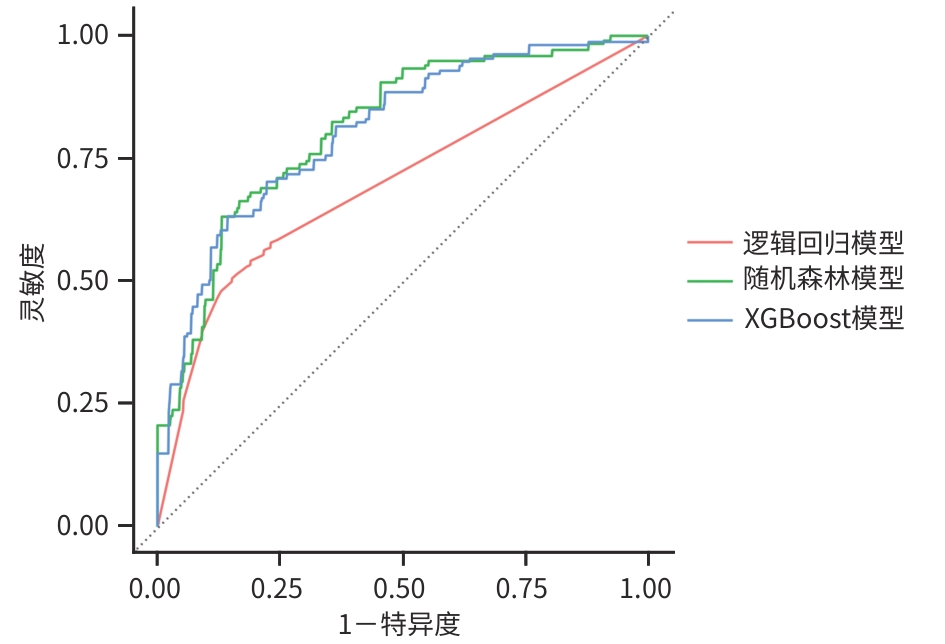
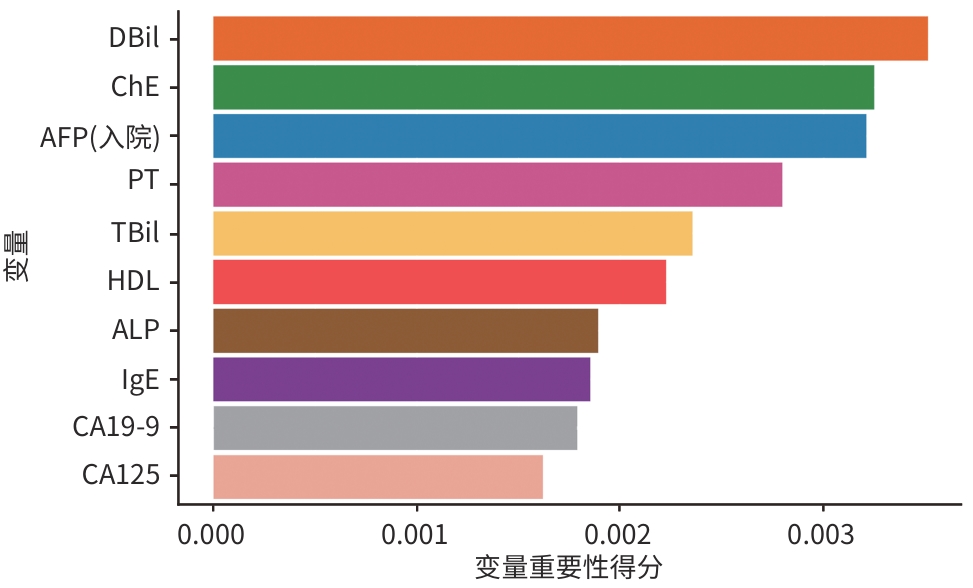
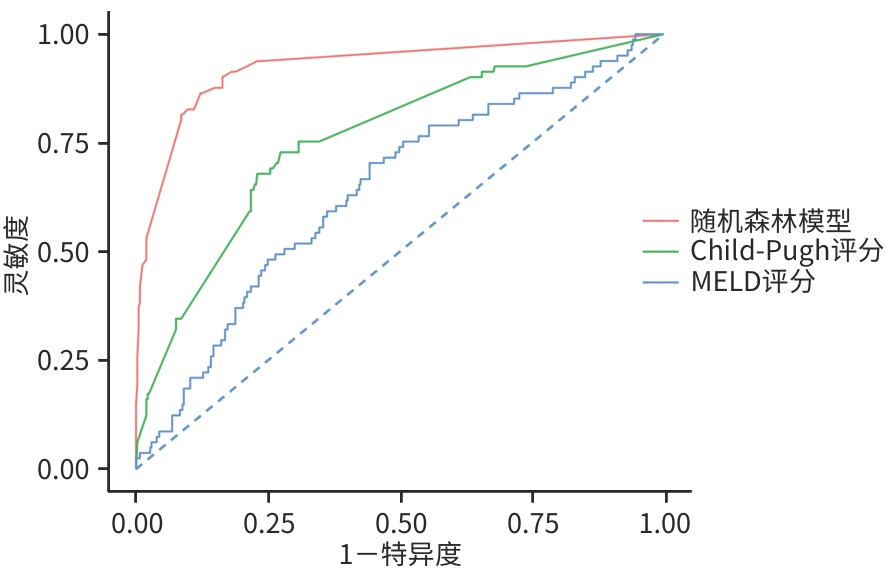
  •   Objective  To construct a predictive model for the risk of 24-month mortality in patients with hepatitis C-related decompensated liver cirrhosis based on machine learning algorithms, and to compare this model with traditional Child-Pugh score and Model for End-Stage Liver Disease (MELD) score.  Methods  A total of 490 patients with hepatitis C-related decompensated liver cirrhosis who were hospitalized in The Third People’s Hospital of Kunming from January 2022 to April 2024 were enrolled and followed up to December 2024. According to the survival status of the patients during follow-up, they were divided into death group with 81 patients and survival group with 409 patients. Demographic data, comorbidities, and biochemical parameters were collected from all patients. The independent-samples t test or the Mann-Whitney U test was used for comparison of continuous data between two groups, and the chi-square test or the Fisher’s exact test was used for comparison of categorical data between groups. The Logistic regression model, the random forest model, and the XGBoost model were used for dataset training, and 10-fold cross validation was performed. The receiver operating characteristic (ROC) curve was plotted, and sensitivity, specificity, area under the ROC curve (AUC), and recall rate were calculated to assess the predictive value of the model.  Results  Among the 490 patients, there were 339 male patients (69.2%) and 151 female patients (30.8%). There were significant differences between the survival group and the death group in the proportion of patients comorbid with malignant liver tumor, chronic liver failure, hepatic encephalopathy, AIDS or hypocalcemia/hypoproteinemia, as well as the amount of ascites and the proportion of patients without medication (all P<0.05). The assessment of the predictive ability of the three machine learning models showed that the random forest model had the largest AUC of 0.811, which was significantly better than that of the Logistic regression model (0.676) and the XGBoost model (0.798), and based on both AUC and specificity, the random forest model was selected as the optimal predictive model. The variable importance analysis showed that the top 10 variables (i.e., direct bilirubin, cholinesterase, alpha-fetoprotein, prothrombin time, total bilirubin, high-density lipoprotein cholesterol, alkaline phosphatase, immunoglobulin E, carbohydrate antigen 19 - 9, and carbohydrate antigen 125) had relatively high contributions to predicting the risk of death. The ROC curve and AUC were used to compare the random forest model with MELD score and Child-Pugh score in terms of their ability to predict the risk of death in patients with hepatitis C-related decompensated liver cirrhosis, and the results showed that the random forest model had had the smallest AUC interval span, suggesting that this model had a significantly better stability than traditional scores.  Conclusion  Direct bilirubin, cholinesterase, alpha-fetoprotein, prothrombin time, total bilirubin, high-density lipoprotein cholesterol, alkaline phosphatase, immunoglobulin E, carbohydrate antigen 19-9, and carbohydrate antigen 125 are characteristic variables for the risk of 24-month death in patients with hepatitis C-related decompensated liver cirrhosis. The random forest model can significantly improve the predictive efficacy of the risk of death in such patients, with a better performance than traditional Child-Pugh score and MELD score.


  • loading
  • [1]
    Polaris Observatory HCV Collaborators. Global change in hepatitis C virus prevalence and cascade of care between 2015 and 2020: A modelling study[J]. Lancet Gastroenterol Hepatol, 2022, 7( 5): 396- 415. DOI: 10.1016/S2468-1253(21)00472-6.
    [2]
    World Health Organization. Global hepatitis report 2024: Action for access in low- and middle-income countries[R/OL]. Geneva: World Health Organization, 2024. https://www.who.int/publications/i/item/9789240090562. https://www.who.int/publications/i/item/9789240090562
    [3]
    TAN DJH, SETIAWAN VW, NG CH, et al. Global burden of liver cancer in males and females: Changing etiological basis and the growing contribution of NASH[J]. Hepatology, 2023, 77( 4): 1150- 1163. DOI: 10.1002/hep.32758.
    [4]
    Chinese Society of Hepatology, Chinese Society of Infectious Diseases. Guidelines for the prevention and treatment of hepatitis C(2022 edition)[J]. Chin J Infect Dis, 2023, 41( 1): 29- 46. DOI: 10.3760/cma.j.cn311365-20230217-00045.

    中华医学会肝病学分会, 中华医学会感染病学分会. 丙型肝炎防治指南(2022年版)[J]. 中华传染病杂志, 2023, 41( 1): 29- 46. DOI: 10.3760/cma.j.cn311365-20230217-00045.
    [5]
    YANG J, RAO HY. Epidemiological trends and treatment benefits of hepatitis C virus infection in China[J]. Clin Medicat J, 2021, 19( 12): 6- 11. DOI: 10.3969/j.issn.1672-3384.2021.12.002.

    杨甲, 饶慧瑛. 中国丙型病毒性肝炎流行趋势及治疗获益[J]. 临床药物治疗杂志, 2021, 19( 12): 6- 11. DOI: 10.3969/j.issn.1672-3384.2021.12.002.
    [6]
    ASRANI SK, DEVARBHAVI H, EATON J, et al. Burden of liver diseases in the world[J]. J Hepatol, 2019, 70( 1): 151- 171. DOI: 10.1016/j.jhep.2018.09.014.
    [7]
    MURPHY SL, XU JQ, KOCHANEK KD, et al. Deaths: Final data for 2018[J]. Natl Vital Stat Rep, 2021, 69( 13): 1- 83.
    [8]
    WANG SB, CHEN JH, JIE R, et al. Natural history of liver cirrhosis in South China based on a large cohort study in one center: A follow-up study for up to 5 years in 920 patients[J]. Chin Med J, 2012, 125( 12): 2157- 2162. DOI: 10.3760/cma.j.issn.0366-6999.2012.12.014.
    [9]
    CÁRDENAS A, GINÈS P. Management of patients with cirrhosis awaiting liver transplantation[J]. Gut, 2011, 60( 3): 412- 421. DOI: 10.1136/gut.2009.179937.
    [10]
    D’AMICO G, GARCIA-TSAO G, PAGLIARO L. Natural history and prognostic indicators of survival in cirrhosis: A systematic review of 118 studies[J]. J Hepatol, 2006, 44( 1): 217- 231. DOI: 10.1016/j.jhep.2005.10.013.
    [11]
    LU JJ, XU AQ, WANG J, et al. Direct economic burden of hepatitis B virus related diseases: Evidence from Shandong, China[J]. BMC Health Serv Res, 2013, 13: 37. DOI: 10.1186/1472-6963-13-37.
    [12]
    ALONSO LÓPEZ S, MANZANO ML, GEA F, et al. A model based on noninvasive markers predicts very low hepatocellular carcinoma risk after viral response in hepatitis C virus-advanced fibrosis[J]. Hepatology, 2020, 72( 6): 1924- 1934. DOI: 10.1002/hep.31588.
    [13]
    National Health Commission. Work plan for eliminating the public health hazards of hepatitis C( 2021— 2030)[EB/OL].( 2021-08-31)[ 2025-02-10]. http://www.nhc.gov.cn/jkj/s3586/202109/c462ec94e6d14d8291c5309406603153.shtml?R0NMKk6uozOC=1654310439640. http: //www.nhc.gov.cn/jkj/s3586/202109/c462ec94e6d14d8291c5309406603153.shtml?R0NMKk6uozOC=1654310439640

    国家卫生健康委员会. 消除丙型肝炎公共卫生危害行动工作方案( 2021— 2030 年)[EB/OL].( 2021-08-31)[ 2025-02-10]. http://www.nhc.gov.cn/jkj/s3586/202109/c462ec94e6d14d8291c5309406603153.shtml?R0NMKk6uozOC=1654310439640. http: //www.nhc.gov.cn/jkj/s3586/202109/c462ec94e6d14d8291c5309406603153.shtml?R0NMKk6uozOC=1654310439640
    [14]
    BRUDEN DJT, MCMAHON BJ, TOWNSHEND-BULSON L, et al. Risk of end-stage liver disease, hepatocellular carcinoma, and liver-related death by fibrosis stage in the hepatitis C Alaska Cohort[J]. Hepatology, 2017, 66( 1): 37- 45. DOI: 10.1002/hep.29115.
    [15]
    JIN YH, CHEN WC, YAN S. The ratio of liver size to abdominal area evaluates the prognosis of 85 patients with decompensated cirrhosis[J]. Chin J Dig, 2017, 37( 8): 547- 549. DOI: 10.3760/cma.j.issn.0254-1432.2017.08.008.

    金月红, 陈卫昌, 严苏. 肝脏面积与腹部面积比评估肝硬化失代偿期患者85例的预后[J]. 中华消化杂志, 2017, 37( 8): 547- 549. DOI: 10.3760/cma.j.issn.0254-1432.2017.08.008.
    [16]
    MCDONALD SA, INNES HA, ASPINALL E, et al. Prognosis of 1169 hepatitis C chronically infected patients with decompensated cirrhosis in the predirect-acting antiviral era[J]. J Viral Hepat, 2017, 24( 4): 295- 303. DOI: 10.1111/jvh.12646.
    [17]
    WEI L, XIE HZ, WENG JB, et al. Risk factors and pathogenic characteristics of nosocomial infections in patients with decompensated cirrhosis[J]. Chin J Nosocomiology, 2017, 27( 21): 4842- 4845. DOI: 10.11816/cn.ni.2017-170695.

    韦玲, 谢会忠, 翁敬飚, 等. 失代偿期肝硬化患者医院感染危险因素及病原学特点探讨[J]. 中华医院感染学杂志, 2017, 27( 21): 4842- 4845. DOI: 10.11816/cn.ni.2017-170695.
    [18]
    SHEN LJ, WU LB, XIONG XQ, et al. Analysis of the influence factors for the prognosis of the patients with HCV-related decompensated cirrhosis[J/CD]. Chin J Clin(Electron Ed), 2013, 7( 20): 9121- 9125. DOI: 10.3877/cma.j.issn.1674-0785.2013.20.027.

    申力军, 吴立兵, 熊小青, 等. 失代偿期丙型肝炎肝硬化患者预后影响因素分析[J/CD]. 中华临床医师杂志(电子版), 2013, 7( 20): 9121- 9125. DOI: 10.3877/cma.j.issn.1674-0785.2013.20.027.
    [19]
    NIU Q. Evaluation value of end-stage liver disease model score combined with NLR on short-term prognosis of decompensated liver cirrhosis[D]. Yanji: Yanbian University, 2021.

    牛琦. 终末期肝病模型评分联合NLR对失代偿期肝硬化短期预后的评估价值[D]. 延吉: 延边大学, 2021.
    [20]
    XIGU RG, SU Y, TONG J, et al. Application of model for end-stage liver disease score in end-stage liver disease[J]. J Clin Hepatol, 2025, 41( 3): 556- 560. DOI: 10.12449/JCH250325.

    希古日干, 苏雅, 佟静, 等. 终末期肝病模型(MELD)评分在终末期肝病中的应用[J]. 临床肝胆病杂志, 2025, 41( 3): 556- 560. DOI: 10.12449/JCH250325.
  • 加载中

Catalog

    通讯作者: 陈斌, bchen63@163.com
    • 1. 

      沈阳化工大学材料科学与工程学院 沈阳 110142

    1. 本站搜索
    2. 百度学术搜索
    3. 万方数据库搜索
    4. CNKI搜索

    Figures(3)  / Tables(3)

    Article Metrics

    Article views (52) PDF downloads(19) Cited by()
    Proportional views
    Related

    /

    DownLoad:  Full-Size Img  PowerPoint
    Return
    Return