中文English
ISSN 1001-5256 (Print)
ISSN 2097-3497 (Online)
CN 22-1108/R
Volume 42 Issue 8
Aug.  2026
Turn off MathJax
Article Contents

Effect of Bazhen Lihe Kangxian prescription on rats with liver fibrosis induced by carbon tetrachloride

DOI: 10.12449/JCH260818
Research funding:

National Natural Science Foundation of China (82160834);

National Famous Traditional Chinese Medicine Expert Inheritance Studio Construction Project (National Medical Education Letter [2022] No.75);

Luo Weisheng Guipai Traditional Chinese Medicine Master Inheritance Studio (Guizhong Medical Development [2023] No.16);

Construction Project of Guangxi Famous Traditional Chinese Medicine Inheritance Studio (Guizhong Medical Science and Education Development [2021] No.6);

Integrated Traditional Chinese and Western Medicine Guangxi First Class Discipline (Cultivation) Construction Project (Guijiao Research [2018] No.12)

More Information
  • Corresponding author: Luo Weisheng, 4011188@qq.com (ORCID: 0009-0005-5879-192X)
  • Received Date: 2026-02-11
  • Accepted Date: 2026-04-13
  • Published Date: 2026-08-25
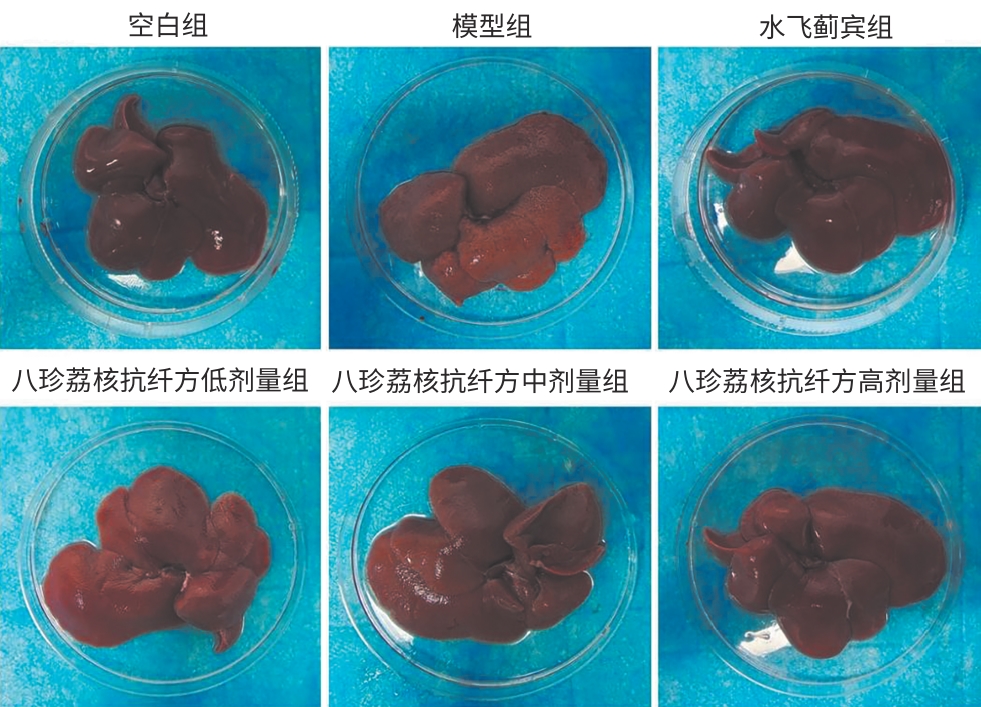
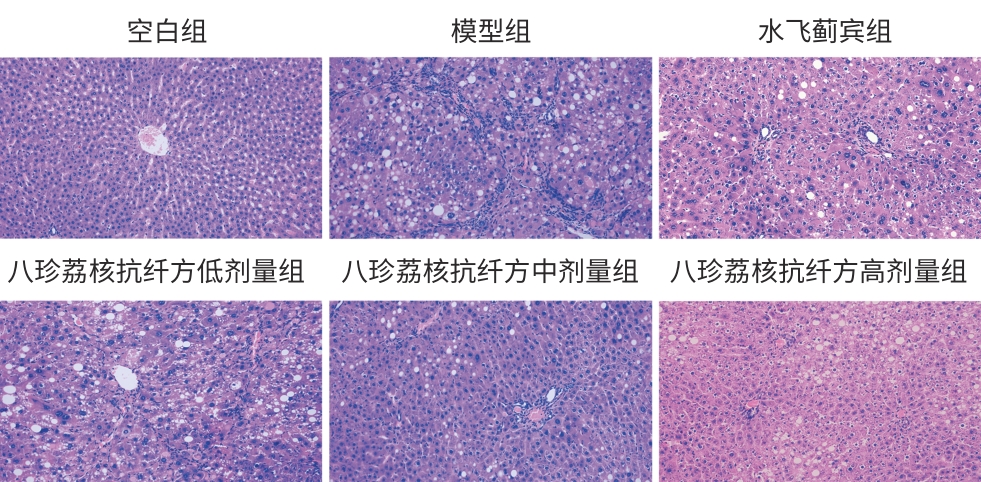
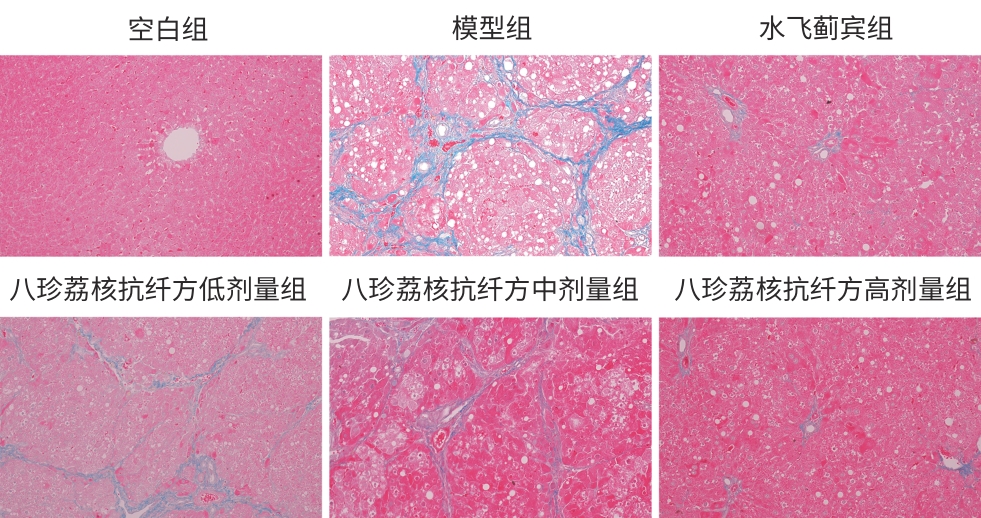
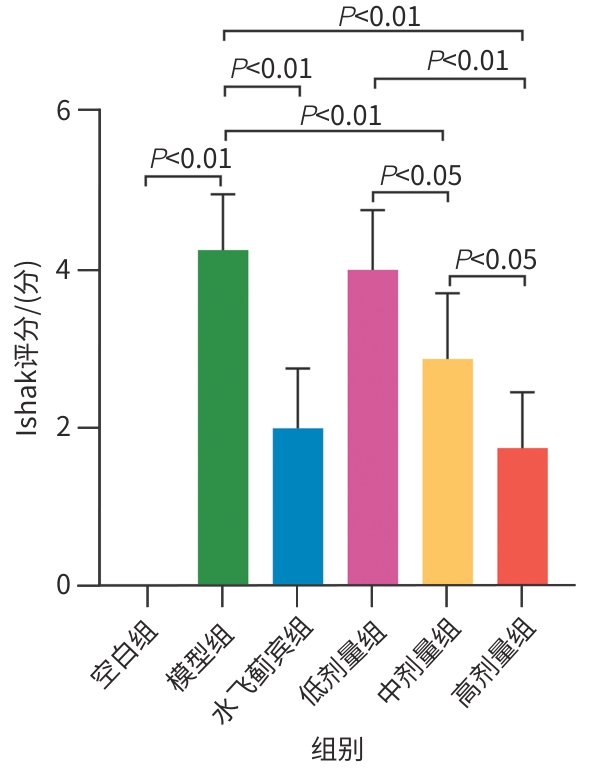
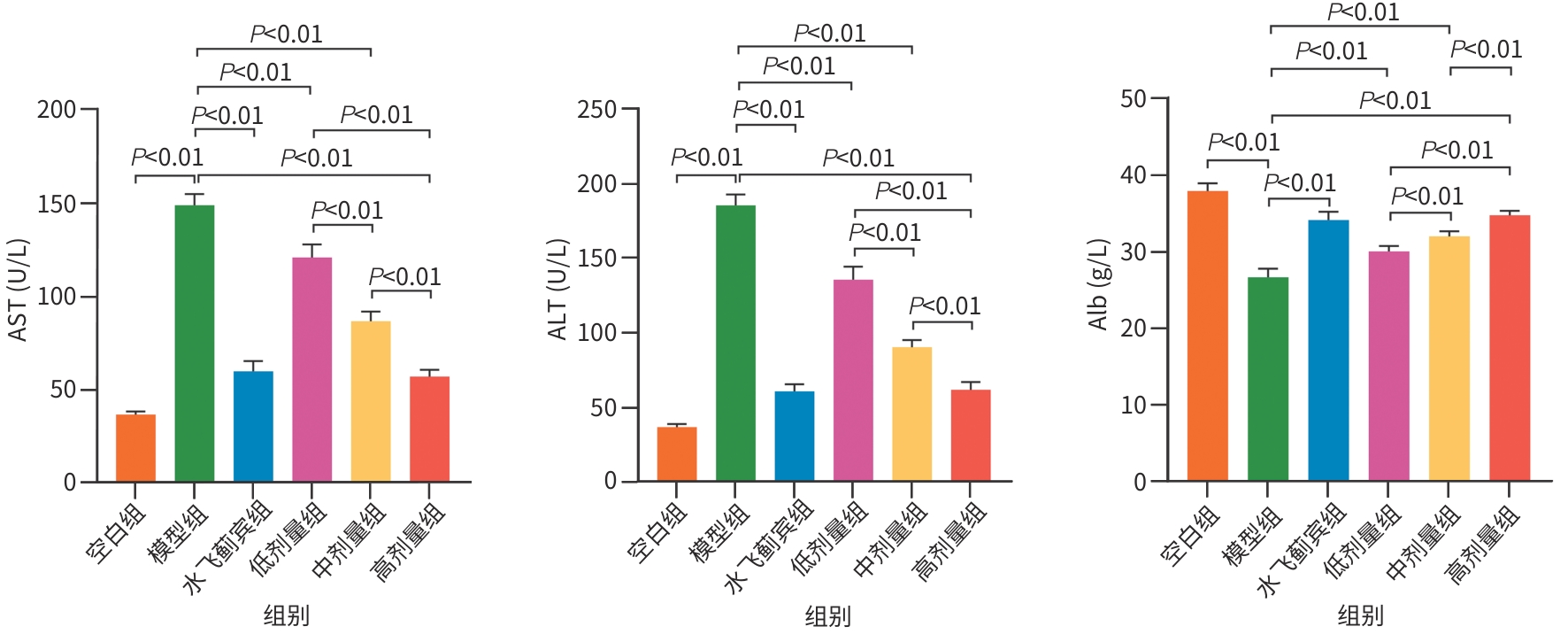
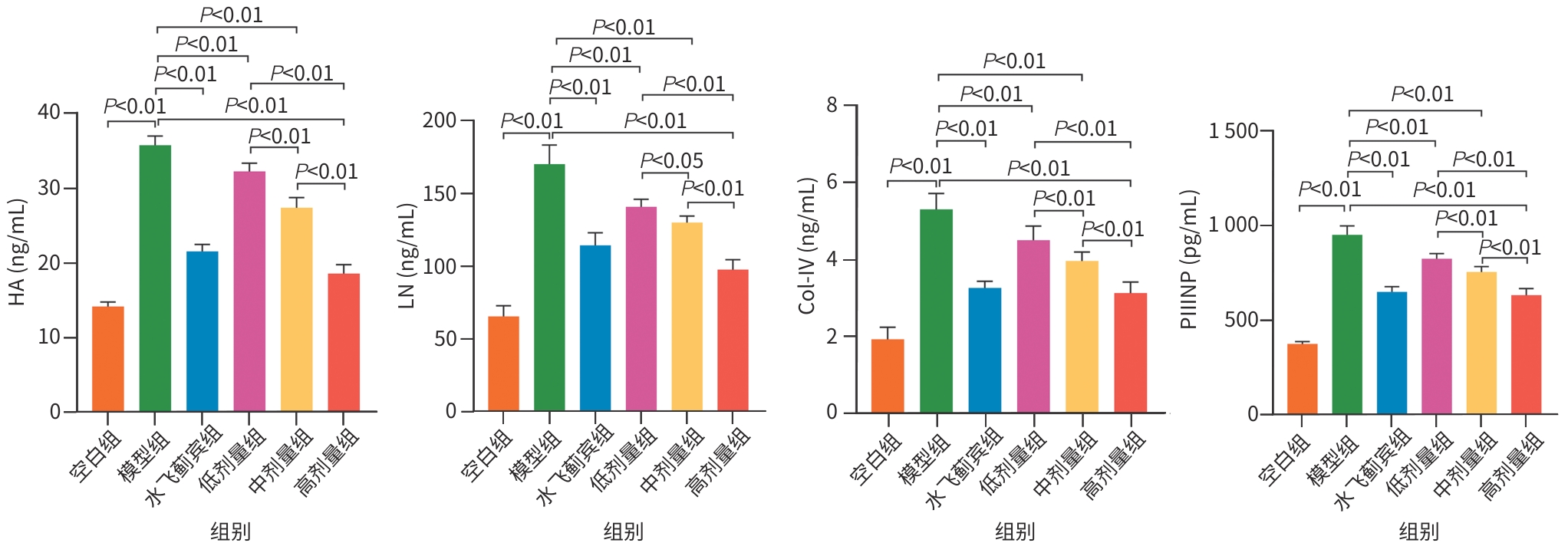
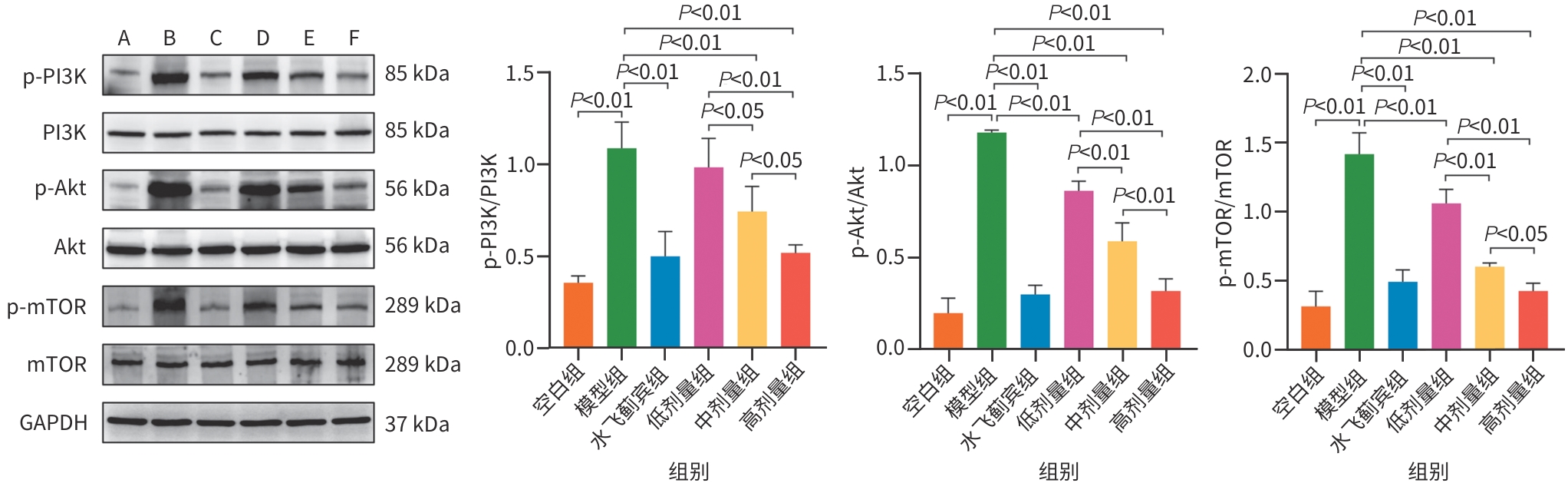
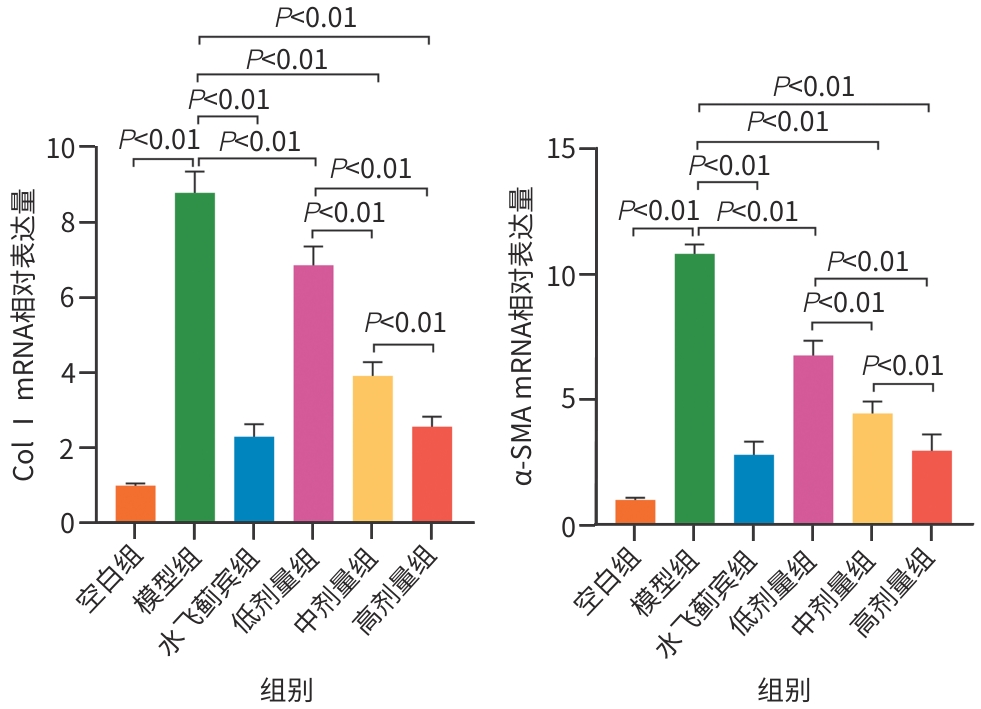
  •   Objective  To investigate the therapeutic effect of Bazhen Lihe Kangxian prescription on rats with liver fibrosis induced by carbon tetrachloride (CCl4), and to explore its mechanism of action against liver fibrosis.  Methods  A total of 50 male Sprague-Dawley rats were randomly divided into blank group, model group, silybin group (43.19 mg/kg), and low-, middle-, and high-dose Bazhen Lihe Kangxian prescription groups (7.96, 15.93, and 31.86 g/kg, respectively). Subcutaneous injection of 40% CCl4-olive oil solution (twice a week for 8 consecutive weeks) was performed to establish a model of liver fibrosis. After successful modeling, the rats in the blank group and the model group were given normal saline by gavage, while those in the treatment groups were given the corresponding drug by gavage, once a day for 4 consecutive weeks. HE staining and Masson staining were used to observe liver histopathological changes; an automatic biochemical analyzer was used to measure the serum levels of albumin (Alb), aspartate aminotransferase (AST), and alanine aminotransferase (ALT); ELISA was used to measure the serum levels of hyaluronic acid (HA), collagen Ⅳ (Col-Ⅳ), procollagen Ⅲ N-terminal peptide (PⅢNP), and laminin (LN); Western blotting was used to measure the protein expression levels of phosphoinositide 3-kinase (PI3K), phosphorylated PI3K (p-PI3K), protein kinase B (Akt), phosphorylated Akt (p-Akt), mammalian target of rapamycin (mTOR), and phosphorylated mTOR (p-mTOR) in liver tissue; RT-qPCR was used to measure the mRNA expression levels of collagen Ⅰ (Col-Ⅰ) and α-smooth muscle actin (α-SMA) in liver tissue. A one-way analysis of variance was used for comparison of continuous data between multiple groups, and the least significant difference t-test was used for further comparison between two groups.  Results  Compared with the blank group, the model group had disrupted hepatic lobular structure, disordered arrangement of hepatic cell cords, hepatocyte fatty degeneration, severe inflammatory cell infiltration, and deposition of massive blue collagen fibers, as well as significant increases in the levels of AST, ALT, HA, LN, Col‑Ⅳ, and PⅢNP and a significant reduction in the level of Alb (all P<0.01). Compared with the model group, the silybin group and the three Bazhen Lihe Kangxian prescription groups had varying degrees of improvement in inflammatory cell infiltration, hepatocyte fatty degeneration, and collagen deposition in liver tissue, as well as significant reductions in the levels of AST, ALT, HA, LN, Col‑Ⅳ, and PⅢNP and a significant increase in the level of Alb (all P<0.01). Compared with the blank group, the model group had significant increases in the protein expression levels of p‑PI3K/PI3K, p-Akt/Akt, and p‑mTOR/mTOR and the mRNA expression levels of Col-I and α-SMA in liver tissue (all P<0.01); compared with the model group, the silybin group and the high- and middle-dose Bazhen Lihe Kangxian prescription groups had significant reductions in the protein expression levels of p-PI3K/PI3K (all P<0.01), and the silybin group and the three Bazhen Lihe Kangxian prescription groups had significant reductions in the protein expression levels of p-Akt/Akt and p-mTOR/mTOR and the mRNA expression levels of Col-Ⅰ and α-SMA in liver tissue (all P<0.01).  Conclusion  Bazhen Lihe Kangxian prescription can improve CCl4-induced liver fibrosis in rats and alleviate liver injury, possibly by inhibiting the PI3K/Akt/mTOR pathway.


  • loading
  • [1]
    Roeb E. Matrix metalloproteinases and liver fibrosis(translational aspects)[J]. Matrix Biol, 2018, 68: 463- 473. DOI: 10.1016/j.matbio.2017.12.012.
    [2]
    Liao Zhaohui, Xie Zhengyuan. Research progress in molecular mechanism of hepatic fibrosis and related therapeutic targets[J]. J Jilin Univ(Med Edit), 2024, 50( 5): 1450- 1456. DOI: 10.13481/j.1671-587X.20240532.

    廖昭辉, 谢正元. 肝纤维化发病的分子机制及其相关治疗靶点的研究进展[J]. 吉林大学学报(医学版), 2024, 50( 5): 1450- 1456. DOI: 10.13481/j.1671-587X.20240532.
    [3]
    National Health Commission. China health statistics yearbook-2020[M]. Beijing: China Union Medical College Press, 2020.

    国家卫生健康委员会. 中国卫生健康统计年鉴-2020[M]. 北京: 中国协和医科大学出版社, 2020.
    [4]
    Chinese Society of Infectious Diseases, Chinese Medical Association; Chinese Society of Hepatology, Chinese Medical Association. Guidelines for the prevention and treatment of chronic hepatitis B(version 2019)[J]. J Clin Hepatol, 2019, 35( 12): 2648- 2669. DOI: 10.3969/j.issn.1001-5256.2019.12.007.

    中华医学会感染病学分会, 中华医学会肝病学分会. 慢性乙型肝炎防治指南(2019年版)[J]. 临床肝胆病杂志, 2019, 35( 12): 2648- 2669. DOI: 10.3969/j.issn.1001-5256.2019.12.007.
    [5]
    Toosi A E. Liver fibrosis: Causes and methods of assessment, a review[J]. Rom J Intern Med, 2015, 53( 4): 304- 314. DOI: 10.1515/rjim-2015-0039.
    [6]
    Aydın M M, Akçalı K C. Liver fibrosis[J]. Turk J Gastroenterol, 2018, 29( 1): 14- 21. DOI: 10.5152/tjg.2018.17330.
    [7]
    Professional Committee of Liver Diseases, Chinese Association of Integrative Medicine. Diagnosis and treatment guidelines of integrated Chinese and western medicine for treating hepatic fibrosis(2019 edition)[J]. Chin J Integr Tradit West Med, 2019, 39( 11): 1286- 1295. DOI: 10.7661/j.cjim.20190916.314.

    中国中西医结合学会肝病专业委员会. 肝纤维化中西医结合诊疗指南(2019年版)[J]. 中国中西医结合杂志, 2019, 39( 11): 1286- 1295. DOI: 10.7661/j.cjim.20190916.314.
    [8]
    Wang Wei, Chen Hanhan, Wang Kai. Research progress of TCM in the treatment of liver fibrosis[J]. Henan Tradit Chin Med, 2021, 41( 1): 137- 140. DOI: 10.16367/j.issn.1003-5028.2021.01.0034.

    王伟, 陈翰翰, 王凯. 中医药治疗肝纤维化研究进展[J]. 河南中医, 2021, 41( 1): 137- 140. DOI: 10.16367/j.issn.1003-5028.2021.01.0034.
    [9]
    Liu Guangqiao, Luo Weisheng. Examples of professor Luo Weisheng’s experience in treating chronic liver disease from deficiency[J]. Chin J Integr Tradit West Med Liver Dis, 2021, 31( 12): 1134- 1135. DOI: 10.3969/j.issn.1005-0264.2021.12.020.

    刘光桥, 罗伟生. 罗伟生教授从虚论治慢性肝病验案举隅[J]. 中西医结合肝病杂志, 2021, 31( 12): 1134- 1135. DOI: 10.3969/j.issn.1005-0264.2021.12.020.
    [10]
    Tang Yan, Ma Xiaocong, Li Minhang, et al. Probe into professor Luo Weisheng’s academic thought of treating liver fibrosis of chronic hepatitis B from liver Yang deficiency[J]. Chin J Integr Tradit West Med Liver Dis, 2022, 32( 12): 1130- 1131. DOI: 10.3969/j.issn.1005-0264.2022.012.019.

    唐燕, 马晓聪, 黎敏航, 等. 罗伟生教授从肝阳虚论治慢性乙型肝炎肝纤维化学术思想探微[J]. 中西医结合肝病杂志, 2022, 32( 12): 1130- 1131. DOI: 10.3969/j.issn.1005-0264.2022.012.019.
    [11]
    Yang Shuang. Clinical observation of Bazhen Lihe Kangxian prescription combined with entecavir in the treatment of chronic hepatitis B with stagnation of liver and spleen deficiency and blood stasis[D]. Nanning: Guangxi University of Chinese Medicine, 2021.

    杨爽. 八珍荔核抗纤方联合恩替卡韦治疗肝郁脾虚夹瘀型慢性乙型肝炎临床疗效观察[D]. 南宁: 广西中医药大学, 2021.
    [12]
    Tang Yan. Based on network pharmacology and experimental research, explore the mechanism of Bazhen Lihe Kangxian prescriptionin anti liver fibrosis[D]. Nanning: Guangxi University of Chinese Medicine, 2023.

    唐燕. 基于网络药理学及实验研究探讨八珍荔核抗纤方抗肝纤维化的作用机制[D]. 南宁: 广西中医药大学, 2023.
    [13]
    Wu Changhui, Shen Min, Li Long, et al. Association between PI3K/Akt/mTOR/p70S6K signaling pathway and hepatic fibrosis[J]. J Clin Hepatol, 2015, 31( 11): 1928- 1932. DOI: 10.3969/j.issn.1001-5256.2015.11.043.

    吴长会, 沈敏, 李龙, 等. PI3K/Akt/mTOR/p70S6K信号通路在肝纤维化发生发展中的作用[J]. 临床肝胆病杂志, 2015, 31( 11): 1928- 1932. DOI: 10.3969/j.issn.1001-5256.2015.11.043.
    [14]
    Feng Yinyi, Yan Jiongyi, Xia Xing, et al. Effect and mechanism of total flavonoids of Lichi Semen on CCl4-induced liver fibrosis in rats, and prediction of Q-marker[J]. China J Chin Materia Med, 2020, 45( 23): 5722- 5731. DOI: 10.19540/j.cnki.cjcmm.20200720.401.

    冯茵怡, 严炯艺, 夏星, 等. 荔枝核总黄酮对CCl4诱导的大鼠肝纤维化的影响及作用机制和潜在Q-marker的预测[J]. 中国中药杂志, 2020, 45( 23): 5722- 5731. DOI: 10.19540/j.cnki.cjcmm.20200720.401.
    [15]
    Wei Wei, Wu Ximei, Li Yuanjian. Experimental methodology of pharmacology[M]. 4th ed. Beijing: People’s Medical Publishing House, 2010.

    魏伟, 吴希美, 李元建. 药理实验方法学[M]. 4版. 北京: 人民卫生出版社, 2010.
    [16]
    Ishak K, Baptista A, Bianchi L, et al. Histological grading and staging of chronic hepatitis[J]. J Hepatol, 1995, 22( 6): 696- 699. DOI: 10.1016/0168-8278(95)80226-6.
    [17]
    Chinese Society of Hepatology, Chinese Medical Association; Chinese Society of Gastroenterology, Chinese Medical Association; Chinese Society of Infectious Diseases, Chinese Medical Association. Consensus on the diagnosis and therapy of hepatic fibrosis(2019)[J]. J Clin Hepatol, 2019, 35( 10): 2163- 2172. DOI: 10.3969/j.issn.1001-5256.2019.10.007.

    中华医学会肝病学分会, 中华医学会消化病学分会, 中华医学会感染病学分会. 肝纤维化诊断及治疗共识(2019年)[J]. 临床肝胆病杂志, 2019, 35( 10): 2163- 2172. DOI: 10.3969/j.issn.1001-5256.2019.10.007.
    [18]
    Sun Suhong. Study on the mechanism of modified Chaihu Danggui powderin treating hepatic fibrosis based on the PI3K/AKT/Bcl-2 signaling pathway[D]. Nanning: Guangxi University of Chinese Medicine, 2024.

    孙素红. 基于PI3K/AKT/Bcl-2信号通路探讨加味柴胡当归汤治疗肝纤维化的机制研究[D]. 南宁: 广西中医药大学, 2024.
    [19]
    Liu X L, Liu W C, Ding C B, et al. Taxifolin, extracted from waste Larix olgensis roots, attenuates CCl4-induced liver fibrosis by regulating the PI3K/AKT/mTOR and TGF-β1/Smads signaling pathways[J]. Drug Des Devel Ther, 2021, 15: 871- 887. DOI: 10.2147/DDDT.S281369.
    [20]
    Yinting Tuo, Hu Xinglan, Li Bocun, et al. Total flavonoids of Lizhihe(Lichi Semen) inhibiting hepatic inflammasome activation and alleviating hepatic fibrosis in rats[J]. Chin Arch Tradit Chin Med, 2026, 44( 2): 211- 214. DOI: 10.13193/j.issn.1673-7717.2026.02.036.

    陀银婷, 胡兴兰, 李泊村, 等. 荔枝核总黄酮抑制肝脏炎症小体活化并减轻大鼠肝纤维化[J]. 中华中医药学刊, 2026, 44( 2): 211- 214. DOI: 10.13193/j.issn.1673-7717.2026.02.036.
    [21]
    Liang Jingyun, Tang Yan, Sima Ling, et al. Study on the mechanism of total flavonoids from Litchi seed on hepatic fibrosis in rats based on MAPK signal pathway[J]. J Chin Med Mater, 2023, 46( 11): 2856- 2860. DOI: 10.13863/j.issn1001-4454.2023.11.037.

    梁瀞云, 唐燕, 司马玲, 等. 基于MAPK信号通路的荔枝核总黄酮对肝纤维化大鼠作用机制的研究[J]. 中药材, 2023, 46( 11): 2856- 2860. DOI: 10.13863/j.issn1001-4454.2023.11.037.
    [22]
    Tian Z F, Hu R Y, Wang Z, et al. Molecular mechanisms behind the inhibitory effects of ginsenoside Rg3 on hepatic fibrosis: A review[J]. Arch Toxicol, 2025, 99( 2): 541- 561. DOI: 10.1007/s00204-024-03941-w.
    [23]
    An L, Lin Y F, Li L Y, et al. Integrating network pharmacology and experimental validation to investigate the effects and mechanism of Astragalus flavonoids against hepatic fibrosis[J]. Front Pharmacol, 2020, 11: 618262. DOI: 10.3389/fphar.2020.618262.
    [24]
    Wu Can, Huang Liang, Mo Liqian, et al. Anti-fibrotic effects of salvianolate on hepatic fibrosis in rats by regulating TGF-β1/Smad and PI3K/AKT/mTOR signaling pathway[J]. Chin J Hosp Pharm, 2019, 39( 7): 670- 675. DOI: 10.13286/j.cnki.chinhosppharmacyj.2019.07.04.

    吴灿, 黄亮, 莫立乾, 等. 丹参多酚酸盐通过TGF-β1/Smad和PI3K/AKT/mTOR信号通路抑制大鼠肝纤维化的进展[J]. 中国医院药学杂志, 2019, 39( 7): 670- 675. DOI: 10.13286/j.cnki.chinhosppharmacyj.2019.07.04.
    [25]
    Zheng Yang, Deng Qingmei, Chen Hao, et al. Molecular mechanism of curcumol against liver fibrosis based on PI3K/AKT/mTOR signaling pathway[J]. Pharmacol Clin Chin Materia Med, 2021, 37( 4): 36- 40. DOI: 10.13412/j.cnki.zyyl.2021.04.005.

    郑洋, 邓青梅, 陈豪, 等. 基于PI3K/AKT/mTOR信号通路探讨莪术醇抗肝纤维化的分子机制[J]. 中药药理与临床, 2021, 37( 4): 36- 40. DOI: 10.13412/j.cnki.zyyl.2021.04.005.
  • 加载中

Catalog

    通讯作者: 陈斌, bchen63@163.com
    • 1. 

      沈阳化工大学材料科学与工程学院 沈阳 110142

    1. 本站搜索
    2. 百度学术搜索
    3. 万方数据库搜索
    4. CNKI搜索

    Figures(8)  / Tables(1)

    Article Metrics

    Article views (10) PDF downloads(0) Cited by()
    Proportional views
    Related

    /

    DownLoad:  Full-Size Img  PowerPoint
    Return
    Return